👧꼬마야 꼬마야 똑똑 누구십니까? – 말놀이 한국어
👧 Knock, Knock, Who Is It? Komaya Komaya – Learn Korean with Korean Word Play & Rhythm
https://youtu.be/OsBWg13eCoE?si=K0QbKlehtNCO2UrP
🇰🇷 (바로 위의 YouTube 영상에서 동일한 말놀이 노래를 즐기실 수 있습니다.)
🇺🇸 (You can enjoy the same word-play song in the YouTube video above.)
🌿 가락과 장단에 맞춰 한국어 시작해요
Start Korean to the Rhythm and Beat
오늘은 한국 전통 말놀이 동요 “ 꼬마야, 꼬마야, 똑똑 누구십니까?”를 소개합니다.
이 노래는 아이들이 단체 줄넘기를 하면서 부르던 전래 노래인데, 최근에는 드라마 〈오징어 게임〉에 소개되면서 다시 주목을 받으며 인기가 높아졌습니다.
Today we’ll look at the traditional Korean word-play song “ Komaya Komaya, Knock, Knock, Who Is It?”.
This song was originally sung while children played group jump rope, but recently it became popular again when it was featured in the drama “Squid Game”.
노래 속에는 동작 동사(뒤를 돌아라, 땅을 짚어라, 만세를 불러라 등)가 들어 있어 줄넘기를 하면서 동시에 따라 해야 합니다. 그래서 단순히 노래를 부르는 것이 아니라, 리듬감·운동신경·집중력이 함께 요구되는 도전적인 놀이예요.
The lyrics contain action verbs (such as “turn around,” “touch the ground,” “shout hurray”), which must be acted out while jumping rope. So it’s not just singing—it’s a playful challenge that requires rhythm, physical coordination, and focus.
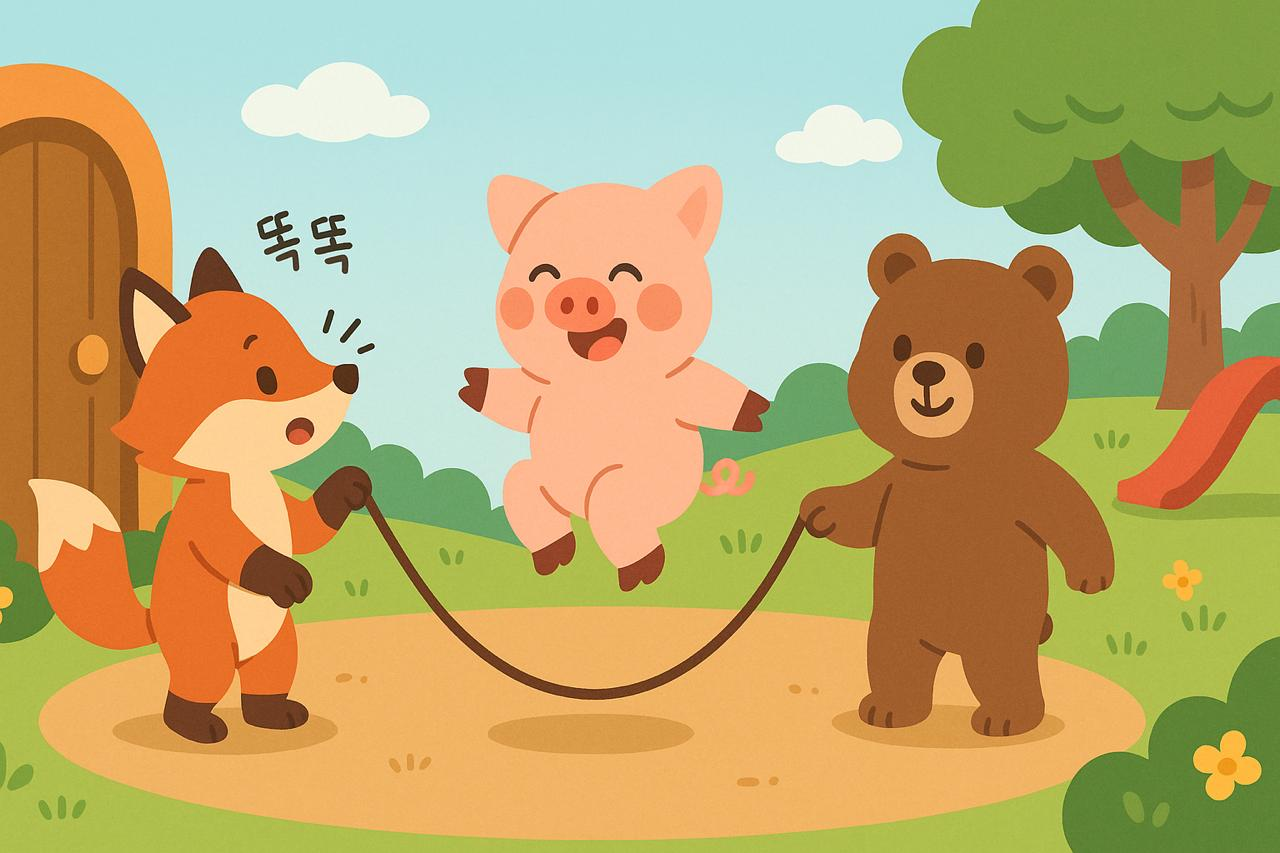
특히 가사 중 “꼬마야 꼬마야 누구십니까? → 꼬마입니다 → 들어오세요”라는 부분은 줄넘기 바깥에 있던 아이가 안으로 들어가는 순간에 불려요. 이때 박자에 맞춰 줄 사이로 들어가는 능력이 중요해서, 아이들의 순발력과 타이밍 감각을 길러 줍니다.
Especially the part “Little one, little one, who is it? → It’s me → Come in” is sung when a child outside the rope tries to jump in. At this moment, the ability to time the jump with the rhythm is crucial, which helps children build quick reflexes and timing sense.
🌿 🇰🇷 가사 & 🇺🇸 그 뜻 (Lyrics & Meaning)
1) 한국어 가사 Korean original lyrics
똑똑 누구십니까?
꼬마입니다
들어오세요
꼬마야 꼬마야 뒤를 돌아라
꼬마야 꼬마야 땅을 짚어라
꼬마야 꼬마야 한 발을 들어라 / 꼬마야 꼬마야 만세를 불러라
꼬마야 꼬마야 잘 가거라
https://youtu.be/OsBWg13eCoE?si=K0QbKlehtNCO2UrP
(유튜브 영상 속 가사는 아래와 같이 반복해서 구성함)
똑똑 누구십니까?
꼬마입니다
들어오세요
꼬마야 꼬마야 뒤를 돌아라
꼬마야 꼬마야 땅을 짚어라
꼬마야 꼬마야 한 발을 들어라
꼬마야 꼬마야 잘 가거라
똑똑 누구십니까?
꼬마입니다
들어오세요
꼬마야 꼬마야 뒤를 돌아라
꼬마야 꼬마야 땅을 짚어라
꼬마야 꼬마야 한 발을 들어라
꼬마야 꼬마야 잘 가거라
똑똑 누구십니까?
꼬마입니다
들어오세요
꼬마야 꼬마야 뒤를 돌아라
꼬마야 꼬마야 땅을 짚어라
꼬마야 꼬마야 만세를 불러라
꼬마야 꼬마야 잘 가거라
똑똑 누구십니까?
꼬마입니다
들어오세요
꼬마야 꼬마야 뒤를 돌아라
꼬마야 꼬마야 땅을 짚어라
꼬마야 꼬마야 만세를 불러라
꼬마야 꼬마야 잘 가거라
2) 한국어 가사 + 영어 뜻
🇰🇷 가사 & 🇺🇸 번역 (Lyrics & Translation)
똑똑 누구십니까?
Knock, knock, who is it?
꼬마입니다
It’s a little one.
들어오세요
Please come in.
꼬마야 꼬마야 뒤를 돌아라
Little one, little one, turn around.
꼬마야 꼬마야 땅을 짚어라
Little one, little one, touch the ground.
꼬마야 꼬마야 한 발을 들어라
Little one, little one, lift one foot.
꼬마야 꼬마야 잘 가거라
Little one, little one, go well.

🎯 표현 레슨 Mini Expression Lesson
표현 한국어 뜻 영어 설명 / 예문
| 뒤를 돌아라 | Turn around | 이 표현은 “돌다(turn)”의 명령형. 줄넘기에서 “돌아라!”라고 하면 몸을 회전해 돌아야 해요. 예: “뒤를 돌아라, 박자에 맞춰!” – Turn around, in time with the beat! |
| 땅을 짚어라 | Touch the ground | 짚다 = to touch or put hands for support. 예: “손을 땅에 짚어라.” – Put your hand on the ground. |
| 한 발을 들어라 | Lift one foot | 한 발 = one foot. 예: “한 발을 들어라, 균형을 잡아!” – Lift one foot, keep your balance! |
| 만세를 불러라 | Shout “Hurray!” | 만세 = hurray/cheer; 불러라 명령형. 예: “모두 함께 만세를 불러라!” – Everyone shout hurray together! |
💡 문화적 배경 설명 Cultural Tip / Background
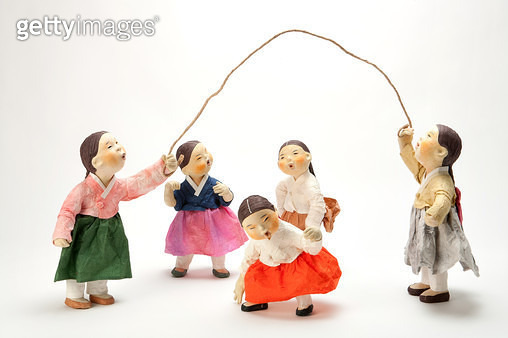
‘꼬마야 꼬마야’는 단순한 줄넘기 동요가 아니라, 줄넘기나 다른 몸놀이를 하면서 부르는 유아 대상의 전래 동요입니다. 아이들의 대근육 발달을 돕고, 놀이 속에서 협동과 리듬감을 기를 수 있는 전통적인 놀이입니다.
“Komaya Komaya” is not just a skipping song, but a traditional children’s play song sung during jump rope or other physical activities. It helps develop children’s large motor skills and encourages cooperation and rhythm through play.
‘꼬마야 꼬마야’는 단순히 어린이만의 놀이가 아니었습니다. 예전에는 동네 잔치나 마을 축제에서 어른들도 함께 참여하며 노래하고 줄넘기를 즐겼습니다. 이는 세대가 어울려 놀이와 문화를 공유하던 공동체적 전통을 보여줍니다.
“Komaya Komaya” was not limited to children’s play. In the past, adults also joined in at village feasts or community festivals, singing the song and playing jump rope together. This reflects a communal tradition where different generations shared play and culture.
🎵 놀이 방법 / How to Play
- 줄 돌리기 / Rope Turning
- 두 명의 아이가 양쪽에서 줄을 앞으로 돌리며 시작합니다.
- Two children stand at each end and start turning the rope forward.
- 노래 부르기 / Singing the Song
- 줄 안의 아이는 “똑똑 누구십니까?”라고 부르고, 줄에 들어가는 아이는 “꼬마입니다, 들어오세요!”라고 대답합니다.
- The child inside the rope sings, “Knock knock, who is it?” and the child entering replies, “It’s me, a little one. Please let me in!”
- Action Play
- 아이는 줄을 넘으며 노래에 맞춰 동작 지시를 따릅니다. 예) “꼬마야 꼬마야 뒤로 돌아라”, “꼬마야 꼬마야 한 발을 들어라”. 줄에 걸리지 않고 들어가거나 나오는 것이 포인트입니다.
- The child jumps the rope while following the action commands in the song. For example: “Turn around,” or “Lift one foot.” The key is to enter or leave without tripping on the rope.
- 응용 / Variations
- 전남 지방의 경우, 노래가 끝나기 전에 줄에 걸리지 않고 밖으로 나가면 성공으로 간주하기도 합니다.
- In some regions (such as Jeonnam province), children must leave the rope before the song ends without tripping to be considered successful.

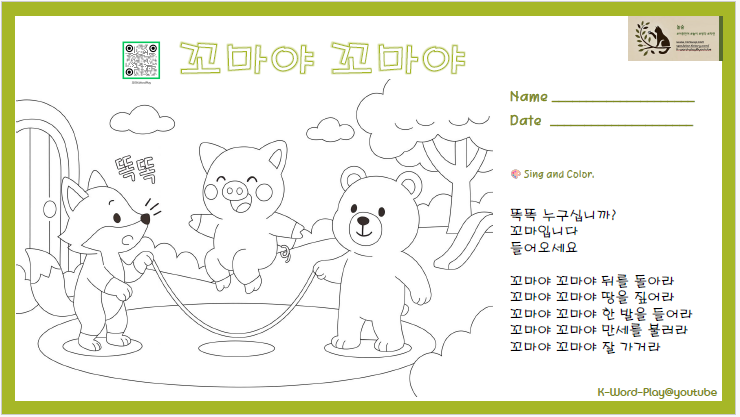
📝활동지 & QR 코드 worksheet download
활동지 다운 받으세요~ 색칠하면서 노래 불러 보세요~
Download the worksheet! 🎨 Sing along while you color!
📱 큐알코드 찍으면 바로 가기!
Scan the QR code to go directly!
더 많은 이야기가 이어질 거예요!
채널 고정!
More to come!
Stay tuned!
@ 서울 사람 Seoul Zian 서울지앵
#한국말놀이 #KoreanWordPlay
#한국어배우기 #LearnKorean
#동요 #KidsSongs
#한국문화 #KoreanCulture
#전래동요 #KoreanNurseryRhyme
#전통놀이 #TraditionalGames
#언어학습 #LanguageLearning
#몸놀이 #BodyMovement
#놀이로배우기 #PlayAndLearn
#어린이한국어 #KoreanForKids
#케이팝문화 #KPopCulture
#오징어게임 #SquidGame
#한국의어린시절 #KoreanChildhood
#한국전통 #KoreanTradition
#줄넘기놀이 #JumpRopePlay