📜훈민정음 서문 – 말놀이 한국어 📜 Hunminjeongeum Preface – Learn Korean with Korean Word Play & Rhythm

✍️ 훈민정음 서문을 노래로
The Hunminjeongeum Preface in Song
“나랏말싸미 듕귁에 달아”는 한국인이라면 고등학교 시절 국어 시간에 외우던, 거의 모두에게 익숙한 훈민정음 서문의 첫 구절입니다.
“Narat mal ssami dyungguk-e dara” is the first line of the Hunminjeongeum Preface, memorized by almost every Korean student during high school Korean class.
한글날이 다가오면 이 구절이 자연스럽게 떠오르지요.
As Hangeul Day approaches, this line naturally comes to mind for many Koreans.
현대 한국어로 바꾸어 읽으면 그 운율과 고풍스러운 맛이 사라지기에, 대부분은 중세 조선시대 표기 그대로 외우고 있습니다.
When read in modern Korean, its rhythm and historic flavor fade away, so most Koreans prefer to memorize it as it was written in the 15th century.
저 역시 그 고유한 울림을 살리고자 노래로 만들어 보았습니다.
I, too, wanted to preserve that original cadence, so I turned it into a song.
기대보다 더 고퀄리티로 제작되어 자랑스럽게 널리 알리고자 합니다.
It turned out even higher in quality than I expected, and I’m proud to share it widely.
한글날을 맞이하여, 세종대왕의 애민 정신과 한글의 아름다움을 다시금 느껴보시길 바랍니다.
On this Hangeul Day, may we once again feel King Sejong’s compassion for the people and the beauty of the Korean alphabet.
https://youtu.be/OjBELBbIkck?si=quGrp1UcGy1IZTdY
🇰🇷 (바로 위의 YouTube 영상에서 동일한 말놀이 노래를 즐기실 수 있습니다.)
🇺🇸 (You can enjoy the same word-play song in the YouTube video above.)
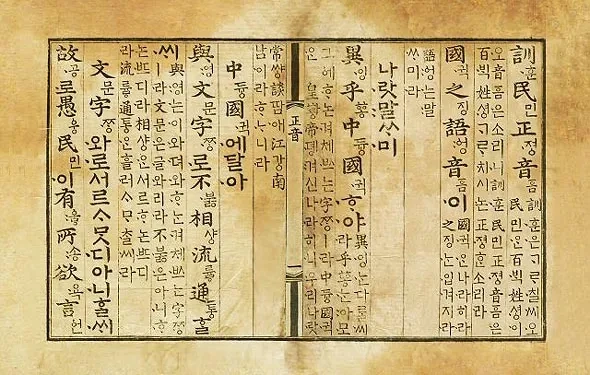
🖋️훈민정음 서문: 원문 Original text
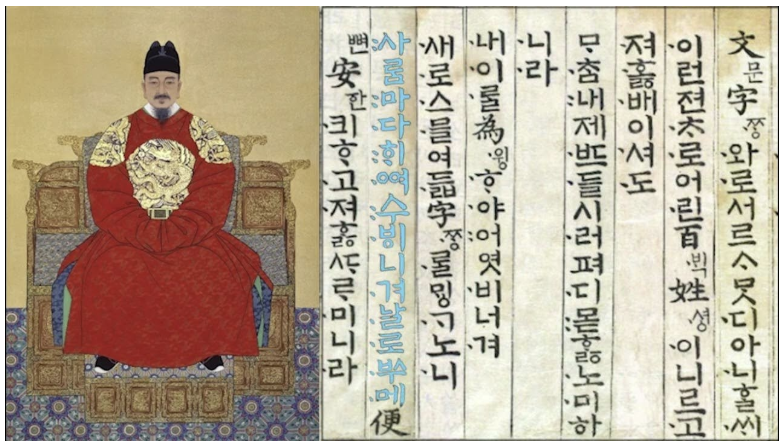
나랏말싸미 듕귁에 달아
문자와로 서르 사맛디 아니할쎄
이런 젼차로 어린 백셩이 니르고져 홀배이셔도
마참내 제 뜨들 시러퍼디 못활 노미하니라
내 이랄 위하야 어엿비 너겨
새로 스믈여듧 짜랄 맹가노니
사람마다 해여 수비니겨 날로 쑤메
뻔한킈 하고져 할 따라미니라
📜 훈민정음 서문 (중세 표기 / 로마자 / 현대어 / 영어)
Hunminjeongeum Preface
(Original Middle Korean text → Romanization → Modern Korean → English translation)
나랏말싸미 듕귁에 달아 문자와로 서르 사맛디 아니할쎄
Narat-mal-ssami dyungguk-e dara munja-waro seoreu samatdi anihalse
나라의 말이 중국과 달라, 한자로는 서로 통하지 아니하여
The language of our nation differs from that of China; thus the Chinese characters cannot faithfully represent it.
이런 젼차로 어린 백셩이 니르고져 홀배 이셔도 마참내 제 뜨들 시러펴디 못할 노미 하니라
Ireon jeoncharo eorin baekseong-i nirugojeo holbae isyeodo machamnae je tteudeul sireopyeodi mothal nom-i hanira
그러한 까닭으로 어린 백성이 말하고자 할 바가 있어도 마침내 제 뜻을 펼치지 못하는 이가 많다.
For this reason, the common people of little learning who wish to express themselves often fail to convey their thoughts.
내 이랄 위하야 어엿삐 너겨 새로 스믈여듧 짜랄 맹가노니
Nae iral wi-haya eoyeot-bi neogyeo saero seumul-yeodeul jjaral maenganoni
내가 이를 가엾게 여겨 새로 스물여덟 글자를 만들었으니
Therefore, moved by compassion for my people, I have created twenty-eight new letters.
사람마다 해여 수비니겨 날로 쑤메 뻔한킈 하고져 할 따라미니라
Saram-mada hae-yeo subinie-gyeo nallo ssume ppeonhan-ki hagojeo hal ttaramini-ra
모든 사람이 쉽게 익혀 매일 쓰는 데 편안하도록 하고자 함이다.
My wish is that everyone may learn them with ease and use them comfortably in everyday life.
💡 문화 팁 Culture Tip
1. 한글날 Hangeul Day
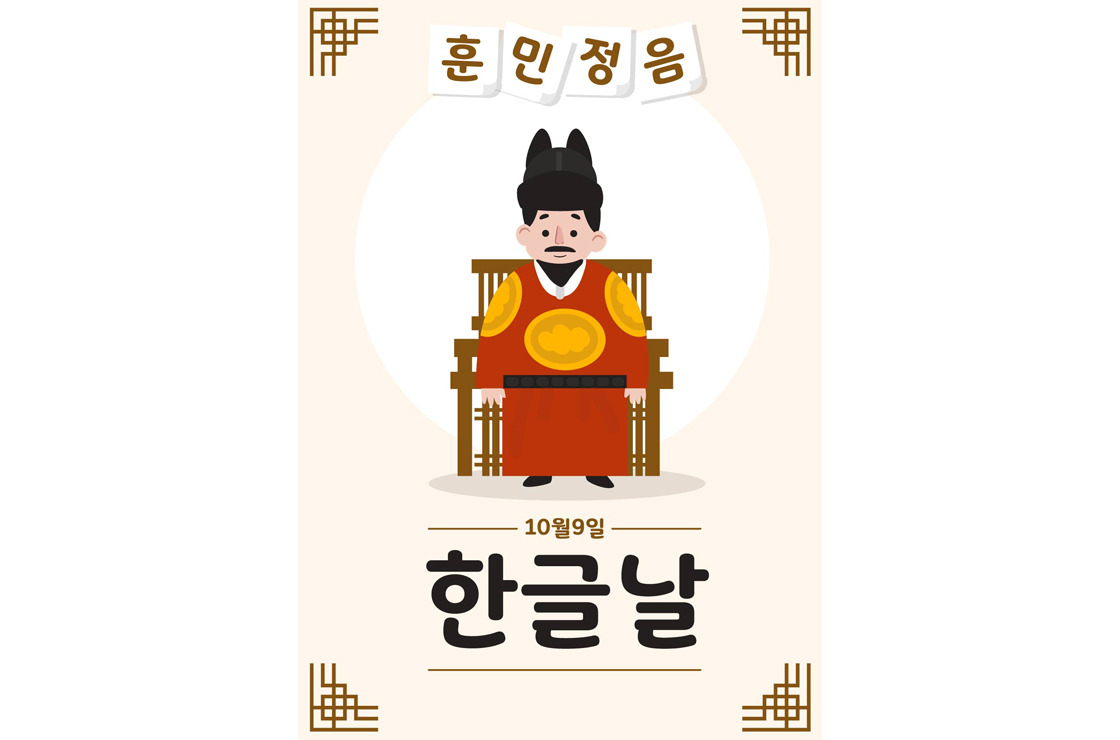
한글날(10월 9일)은 세종대왕이 훈민정음을 반포한 것을 기념하는 날입니다.
Hangeul Day (October 9) celebrates King Sejong’s proclamation of Hunminjeongeum.
이 날은 글자를 배우기 어려웠던 백성을 위해 새로운 문자를 만든 애민(愛民) 정신을 기리고, 한글의 우수성을 되새기는 날입니다.
It honors his compassion for the people who struggled to learn Chinese characters and highlights the excellence of Hangeul.
2. 훈민정음 Hunminjeongeum
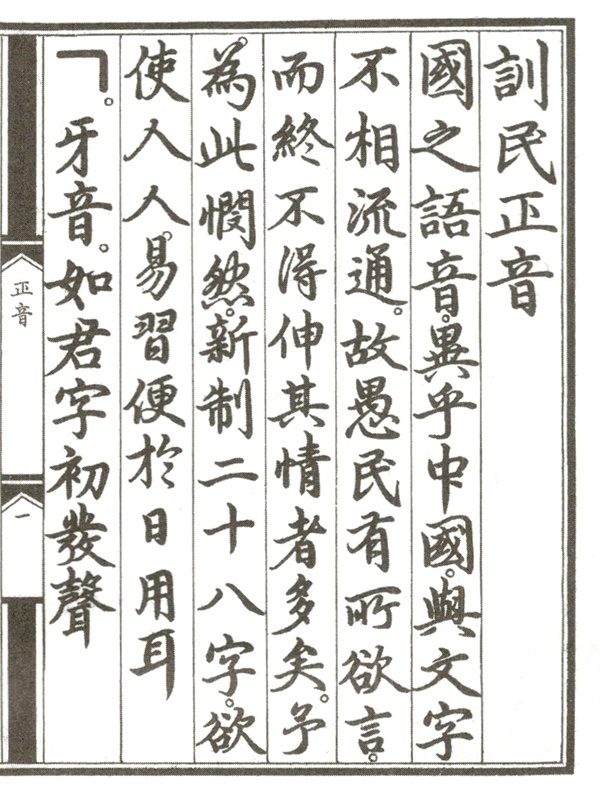
훈민정음은 “백성을 가르치는 바른 소리”라는 뜻으로, 1443년에 창제되어 1446년에 반포되었습니다.
Hunminjeongeum means “the correct sounds to instruct the people.”
It was invented in 1443 and promulgated in 1446.
세종대왕과 집현전 학자들이 백성이 쉽게 배우고 발음할 수 있도록 과학적인 원리로 만들었습니다.
King Sejong and the scholars of Jiphyeonjeon designed it scientifically so that ordinary people could learn and pronounce it easily.
3. 서문의 가치 The Value of the Preface
훈민정음 서문은 단순한 소개글을 넘어, 문자를 통한 평등한 소통과 교육의 중요성을 강조하는 역사적 선언문입니다.
The preface is more than an introduction; it is a historic declaration of equal communication and the importance of education through writing.
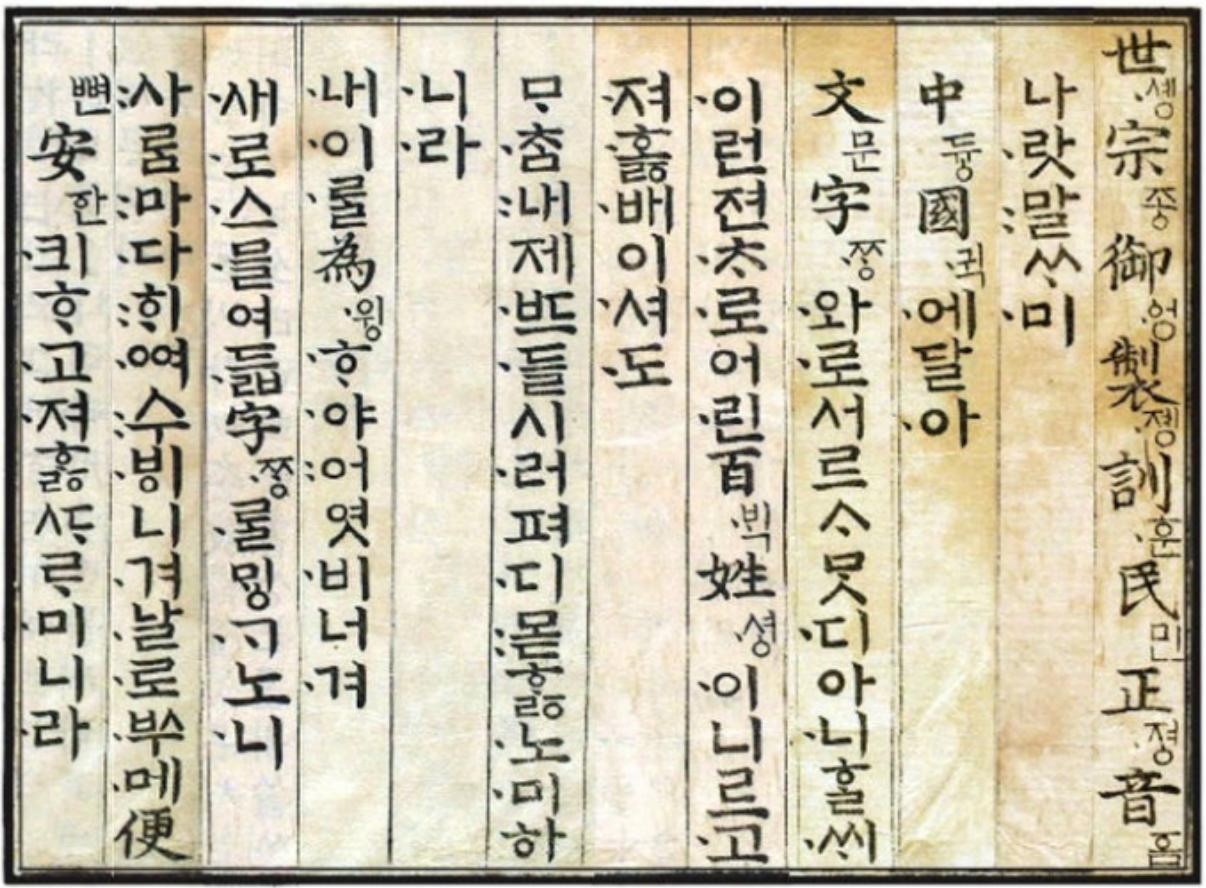
🏷️ 세종어제훈민정음 (Sejong Eoje Hunminjeongeum)
– “The Correct Sounds for Instructing the People, Personally Composed by King Sejong”
“세종어제훈민정음”은 훈민정음 서문 앞에 붙은 정식 제목입니다.
“Sejong Eoje Hunminjeongeum” is the official title placed before the preface of Hunminjeongeum.
- 세종(Sejong) : 조선 4대 임금 세종대왕을 뜻합니다.
- Sejong : Refers to King Sejong, the 4th monarch of the Joseon dynasty.
- 어제(Eoje) : “임금께서 직접 지으신”이라는 뜻입니다.
- Eoje : Means “personally composed by the king.”
- 훈민정음(Hunminjeongeum) : “백성을 가르치는 바른 소리”라는 뜻으로, 새로 만든 한글 글자를 가리킵니다.
- Hunminjeongeum : Literally “The Proper Sounds for Instructing the People,” referring to the newly created Korean alphabet.
따라서 “세종어제훈민정음”은 “세종대왕께서 몸소 지으신 ‘백성을 가르치는 바른 소리’ ”라는 의미를 담고 있습니다.
Thus, “Sejong Eoje Hunminjeongeum” means “The Proper Sounds for Instructing the People, personally composed by King Sejong.”
이 제목은 훈민정음이 단순히 학자들이 만든 글자가 아니라, 세종대왕이 친히 창제하고 서문까지 지은 왕의 친저(親著)임을 드러냅니다.
The title highlights that the Hunminjeongeum was not merely devised by scholars but was authored and introduced by the king himself.
훈민정음 서문은 단순한 소개글을 넘어, 문자를 통한 평등한 소통과 교육의 중요성을 강조하는 역사적 선언문입니다.
The preface is more than an introduction; it is a historic declaration that stresses equal communication and the importance of education through writing.
특히 서문에는 자주 정신(Independence), 애민 정신(Benevolence toward the people), 창조 정신(Creativity), 실용 정신(Practicality)의 네 가지 정신이 깃들어 있습니다.
In particular, the preface embodies four core ideals: Independence, Benevolence toward the people, Creativity, and Practicality.
- 자주 정신 Independence: 중국 문자에 의존하지 않고 우리 언어에 맞는 문자를 창제한 정신 The spirit of independence—creating a script tailored to our own language rather than relying on Chinese characters.
- 애민 정신 Benevolence toward the People: 글을 몰라 뜻을 펼치지 못한 백성을 위해 쉽게 배울 수 있는 문자를 마련 The benevolent will to enable ordinary people—previously unable to express themselves due to illiteracy—to learn easily.
- 창조 정신 Creativity: 세계에서 보기 드문 독창적 문자 체계를 고안 The creative drive to design an unprecedented and scientifically innovative writing system.
- 실용 정신 Practicality: 누구나 매일 쓰기에 편리하도록 설계 The practical aim of making the letters convenient for everyday use by all.
이러한 가치들은 세종대왕의 훈민정음 창제 철학을 잘 보여 주며, 오늘날에도 교육과 문화의 기본 정신으로 이어지고 있습니다.
These values reflect King Sejong’s philosophy behind the creation of Hunminjeongeum and continue to inspire the foundations of education and culture today.

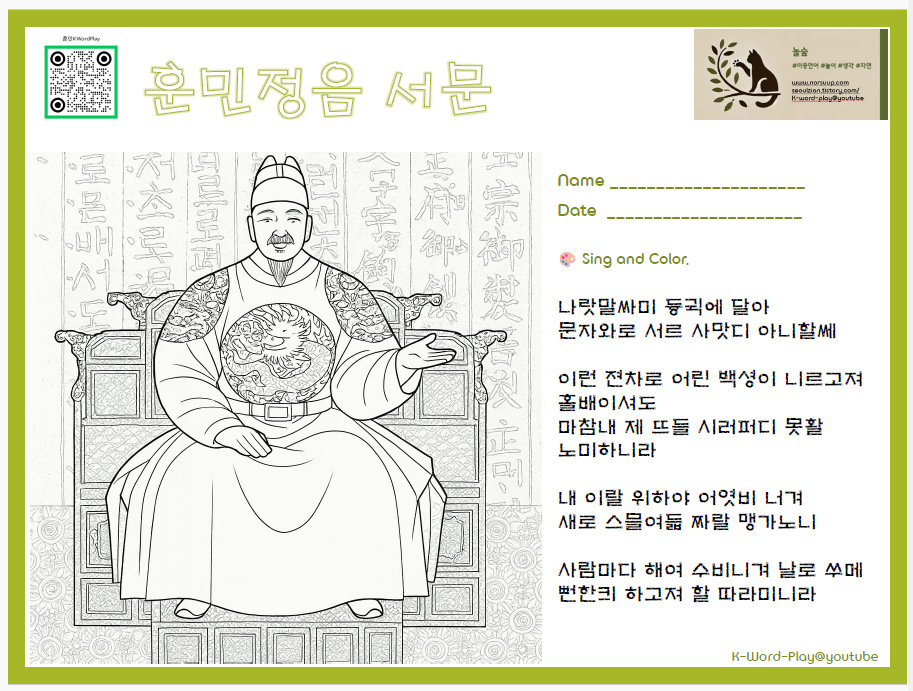
📝활동지 & QR 코드 worksheet download
활동지 다운 받으세요~ 색칠하면서 노래 불러 보세요~
Download the worksheet! 🎨 Sing along while you color!
📱 큐알코드 찍으면 바로 가기!
Scan the QR code to go directly!
더 많은 이야기가 이어질 거예요!
채널 고정!
More to come!
Stay tuned!
@ 서울 사람 Seoul Zian 서울지앵
#한국말놀이 #KoreanWordPlay
#한국어배우기 #LearnKorean
#한국문화 #KoreanCulture
#전래동요 #KoreanNurseryRhyme
#전통놀이 #TraditionalGames
#언어학습 #LanguageLearning
#훈민정음 #Hunminjeongeum
#세종대왕 #KingSejong
#한글 #Hangeul #Hangul
#한글날 #HangeulDay
#훈민정음서문 #PrefaceOfHunminjeongeum
#한국문화유산 #KoreanCulturalHeritage
#문화유산 #CulturalHeritage
#한국어학습 #LearnKorean
#전통과혁신 #TraditionAndInnovation