변상벽의 묘작도, 고양이와 참새, 까치의 특별한 만남
Byeon Sang-byeok’s “Myojakdo”: A Special Meeting of Cats, Sparrows, and a Magpie

난 고양이를 엄청 좋아해요. 평생 여러 마리의 고양이를 키우거나, 모시거나, 돌보며 살아왔죠.
I really love cats. I am a cat person. Throughout my life, I have raised, cared for, and lived alongside many of them.
고양이는 제게 단순한 반려동물이 아니라, 삶의 동반자이자 영감을 주는 존재예요.
For me, cats are not just pets but companions and a constant source of inspiration.
그래서 오늘은 제가 좋아하는 고양이 그림 몇 가지를 소개해 보려 합니다.
So today, I’d like to introduce a few cat paintings that I love.
한국 문화 속에는 이렇게 매력적인 부분이 많습니다. 고양이와 새, 그리고 사람의 삶이 어우러진 그림 속에서 한국인의 미의식과 상징 세계를 엿볼 수 있습니다.
Korean culture holds so many fascinating aspects. In these paintings of cats, birds, and everyday life, we can glimpse the Korean sense of beauty and the symbolic world behind it.

🖼 묘작도란 무엇인가?
What Is “Myojakdo”?
‘묘작도(猫雀圖)’는 고양이와 참새를 함께 그린 그림으로, 조선 후기부터 자주 제작된 영모화(翎毛畵, 동물과 새를 그린 그림)의 한 장르입니다.
“Myojakdo” (Cat and Sparrow Painting) is a type of painting that depicts cats and sparrows together. It belongs to the category of animal-and-bird paintings (yeongmohwa) that became popular in the late Joseon Dynasty.
고양이(猫, 묘)는 발음이 ‘모(耄, 늙을 모)’와 비슷하여 노인과 장수를 상징하고, 참새(雀, 작)는 자녀와 다복(多福)을 의미합니다.
The cat (猫, myo) symbolized old age and longevity because its pronunciation was similar to “mo” (耄, meaning elderly). The sparrow (雀, jak) symbolized children and family prosperity.
따라서 묘작도는 단순한 동물 그림을 넘어, 노인의 장수와 가문의 번창을 기원하는 길상화(吉祥畵, auspicious painting)로 감상되었습니다.
Thus, “Myojakdo” was not just an animal painting but was appreciated as an auspicious image wishing for an elder’s longevity and the prosperity of the family.
또한 일부 작품에는 까치(鵲, jak)가 등장하여, 기쁜 소식과 경사스러운 일을 알리는 상징을 더하기도 했습니다.
In some versions, a magpie (鵲, jak) also appears, adding the symbolism of good news and joyous occasions.

👨🎨 화가 변상벽과 그의 작품
The Artist Byeon Sang-byeok and His Work
변상벽(卞相璧, 18세기 활동)은 조선 후기 영모화의 대가로, 고양이와 닭을 특히 잘 그려 ‘변고양이’라는 별명을 얻었습니다.
Byeon Sang-byeok (active in the 18th century) was a master of animal-and-bird painting in the late Joseon period. He was especially skilled at painting cats and chickens, earning him the nickname “Byeon the Cat.”
현재 그의 〈묘작도〉는 여러 소장처에 남아 있는데, 그중 대표적인 것이 국립중앙박물관과 간송미술관 소장본입니다.
Today, several versions of his “Myojakdo” survive, with the most notable ones housed at the National Museum of Korea and the Kansong Art Museum.
🐾 국립중앙박물관 소장본
The National Museum of Korea Version
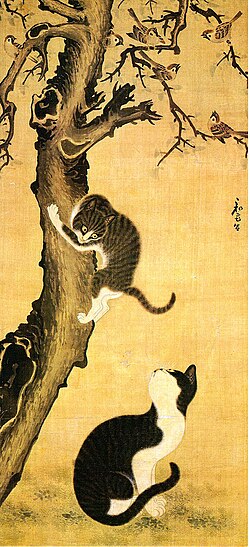
국립중앙박물관 소장본은 두 마리 고양이와 나무 위 참새 떼를 중심으로 한 구도입니다.
The National Museum of Korea version features two cats and a flock of sparrows in the tree above.
화면 아래 큰 고양이는 땅에 앉아 위를 응시하고, 작은 고양이는 나무를 타고 오르며 사냥감을 노리는 듯합니다.
One large cat sits on the ground gazing upward, while a smaller cat climbs the tree as if ready to pounce on its prey.
위쪽 가지에는 참새들이 옹기종기 앉아 있어, 고양이들의 시선과 맞물려 긴장감 넘치는 장면을 만들어 냅니다.
On the branches above, sparrows are perched together, creating a tense atmosphere as the cats’ sharp gazes meet them.
🐾 간송미술관 소장본
The Kansong Art Museum Version
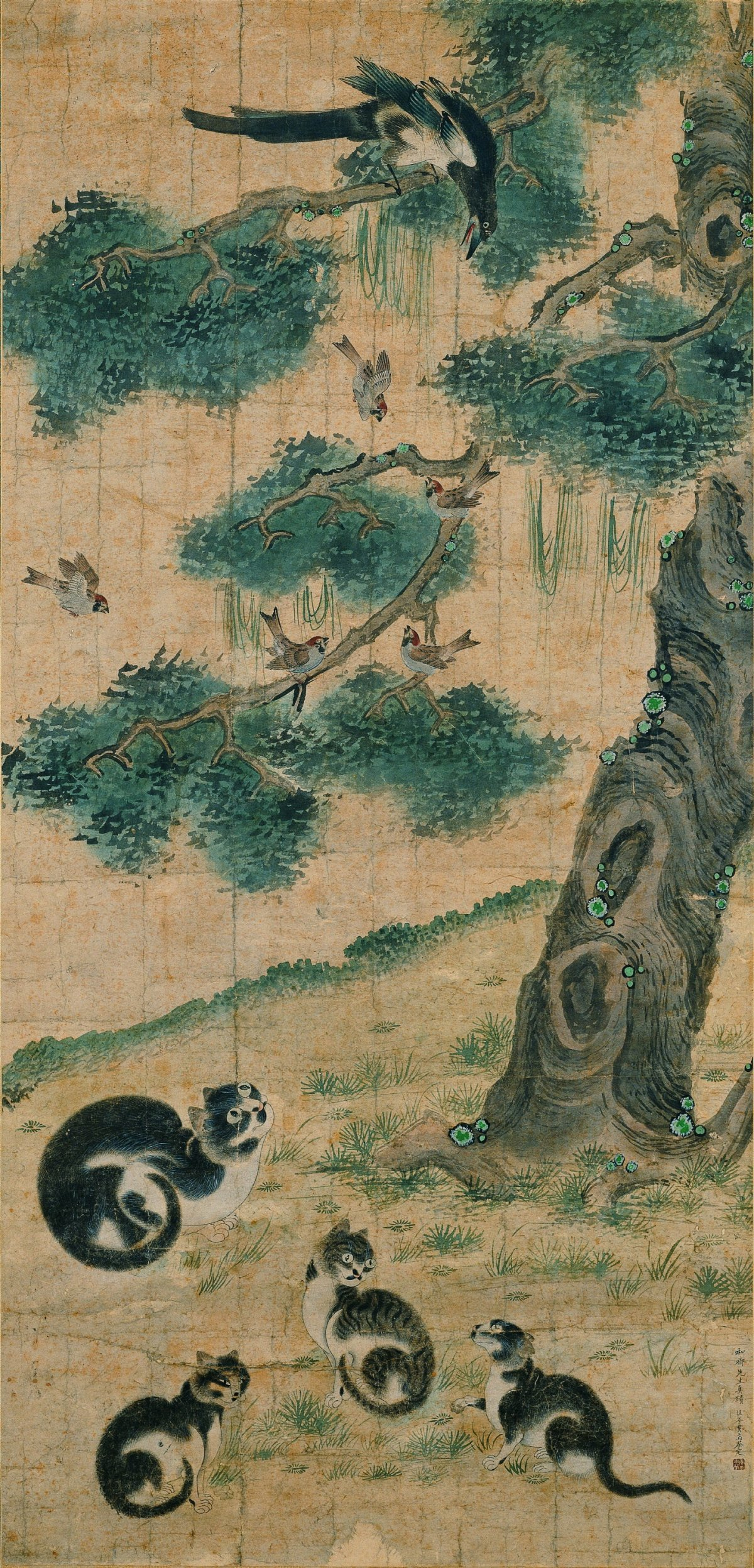
간송미술관 소장본은 네 마리 고양이와 참새 무리, 그리고 까치 한 마리가 등장하는 보다 극적인 구도입니다.
The Kansong Art Museum version is more dramatic, with four cats, a flock of sparrows, and a magpie included in the scene.
고양이들은 저마다 다른 자세와 표정으로 묘사되어 생동감을 주며, 위쪽에서 까치가 울부짖으며 날개를 펼쳐 좋은 소식을 전하는 듯한 장면을 연출합니다.
Each cat is depicted in a different pose and expression, adding liveliness. Above them, the magpie spreads its wings and cries out, as if delivering good news.
참새와 까치의 소란스러운 움직임은 고양이들의 긴장된 시선과 어우러져 화면 전체에 극적인 긴박감을 불어넣습니다.
The noisy fluttering of sparrows and the magpie’s call intertwine with the tense stares of the cats, infusing the entire painting with dramatic intensity.
🎉 두 그림의 공통점과 상징성
Shared Features and Symbolism of the Two Paintings
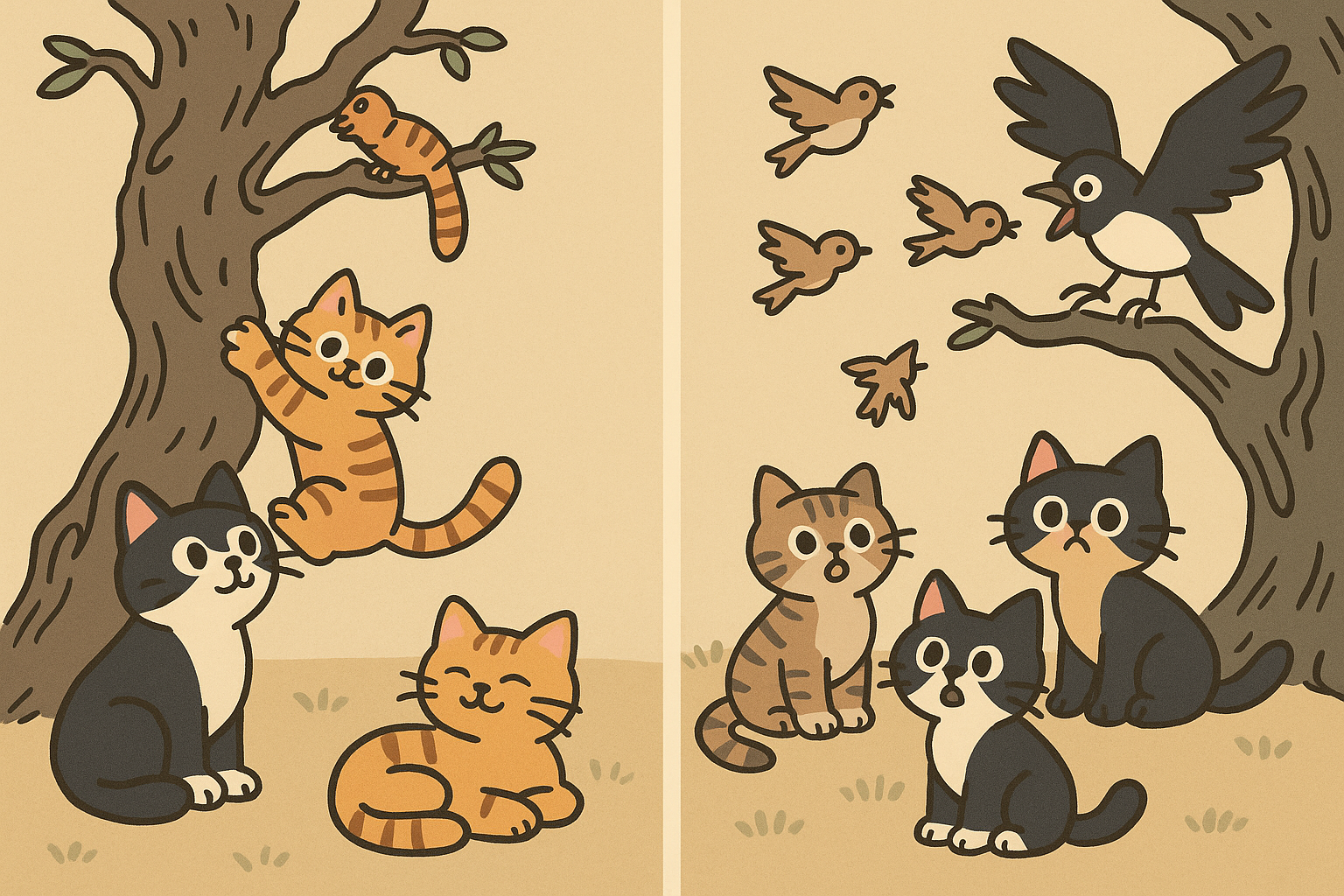
두 소장본 모두 고양이와 새들은 섬세한 붓터치로 사실적으로 묘사되었고, 나무는 거친 붓질로 그려져 강한 대비를 보여줍니다.
In both versions, the cats and birds are depicted with meticulous brushstrokes for realism, while the tree is painted with bold, rough strokes, creating a striking contrast.
국립중앙박물관본은 단순하고 집중된 긴장감을, 간송미술관본은 까치가 더해진 복잡하고 극적인 서사를 보여줍니다.
The National Museum version conveys a simpler, focused tension, while the Kansong version—with the magpie—presents a more complex and dramatic narrative.
이를 통해 변상벽은 같은 주제를 다양한 방식으로 풀어내며, 현실적 묘사와 상징적 의미를 동시에 담아냈음을 알 수 있습니다.
Through these works, Byeon Sang-byeok demonstrates how he could reinterpret the same theme in multiple ways, blending realistic depiction with symbolic meaning.
✨ 맺음말
Conclusion
〈묘작도〉는 고양이와 참새, 때로는 까치를 함께 배치하여 장수와 다복, 기쁜 소식을 상징하는 조선 후기 길상화의 정수를 보여줍니다.
“Myojakdo” embodies the essence of late Joseon auspicious painting by combining cats, sparrows, and sometimes a magpie to symbolize longevity, family prosperity, and good news.
국립중앙박물관 소장본과 간송미술관 소장본은 서로 다른 구도와 분위기를 지녔지만, 모두 변상벽 특유의 사실주의와 세심한 필치를 잘 보여주는 걸작입니다.
Though differing in composition and mood, both the National Museum and Kansong versions are masterpieces that showcase Byeon Sang-byeok’s realism and refined brushwork.
오늘날에도 이 그림들은 우리에게 고양이와 참새, 까치가 어우러진 특별한 이야기를 전해 줍니다.
Even today, these works continue to tell us the special story of cats, sparrows, and a magpie coming together.

더 많은 이야기가 이어질 거예요!
채널 고정!
More to come!
Stay tuned!
@ 서울 사람 Seoul Zian 서울지앵
#고양이그림 #CatArt
#한국미술 #KoreanArt
#변상벽 #ByeonSangbyeok
#묘작도 #Myojakdo
#영모화 #AnimalAndBirdPainting
#국립중앙박물관 #NationalMuseumofKorea
#간송미술관 #KansongArtMuseum
#전통회화 #TraditionalPainting
#한국문화 #KoreanCulture
#그림이야기 #ArtStory
#조선시대 #JoseonDynasty
#조선미술 #JoseonArt
#변상벽 #ByeonSangbyeok
#고양이그림 #CatPainting
#참새그림 #SparrowArt
#까치그림 #MagpieArt
#한국전통회화 #KoreanTraditionalPainting
#한국문화 #KoreanCulture
#길상그림 #AuspiciousPainting