👀 꼭꼭 숨어라 머리카락 보일라!
🇰🇷 한국의 전통 숨바꼭질 놀이 | 🇺🇸 Korean Traditional Hide and Seek Game
https://youtu.be/8_PA097KUCY?si=M3cp0FbBvijGbuCc
🇰🇷 (바로 위의 YouTube 영상에서 동일한 말놀이 노래를 즐기실 수 있습니다.)
🇺🇸 (You can enjoy the same word-play song in the YouTube video above.)
🎵 전래동요 ‘꼭꼭 숨어라 머리카락 보일라’
🎵 The Korean Folk Song “Kkok-Kkok Sumeora (Hide, Hide, or Your Hair Will Show!)”
한국의 아이들은 예전부터 마당이나 골목에서 ‘숨바꼭질’을 하며 놀았습니다.
Children in Korea have long enjoyed playing “Sumbakkokjil,” or hide and seek, in courtyards and village alleys.
이때 아이들은 단순히 숨고 찾는 것에 그치지 않고, 노래를 부르며 장단을 맞추었어요.
They didn’t just hide and seek — they sang a rhythmic chant while playing the game.
그 대표적인 노래가 바로 “꼭꼭 숨어라 머리카락 보일라!” 입니다.
The most famous of these songs is “Kkok-Kkok Sumeora (Hide, Hide, or Your Hair Will Show!).”

🏡 놀이의 풍경 | The Scene of Play
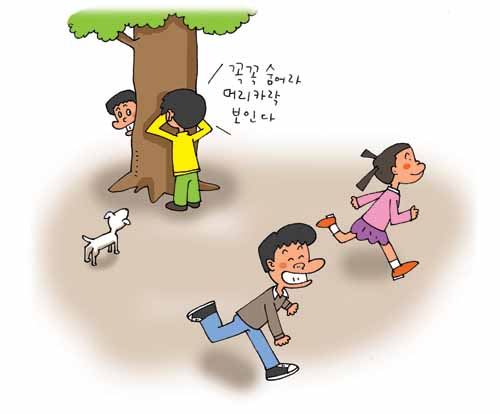
“술래”는 눈을 가리고 숫자를 세며 친구들이 숨을 때까지 기다립니다.
The “seeker” covers their eyes and counts while the others find hiding spots.
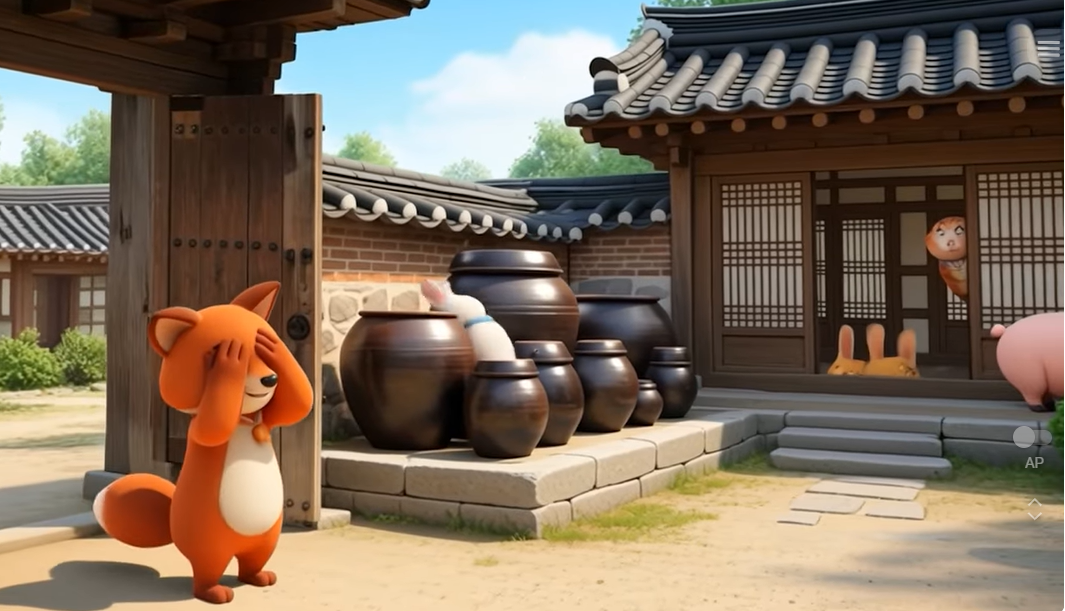
장독대 뒤, 대문 뒤, 담장 뒤 — 아이들의 웃음소리가 들립니다.
Behind the jars, the gate, and the wall — the children’s laughter fills the air.
“찾았다, 찌꽁!”이라는 외침과 함께, 숨바꼭질은 한바탕 웃음으로 끝이 나지요.
With the shout “Found you! Jjik-kong!” the game ends in bursts of laughter.
💬 노랫말 | Lyrics
꼭꼭 숨어라 머리카락 보일라, 옷자락이 보일라
Hide, hide, or your hair will show, or your clothes will show!
꼭꼭 숨어라 발뒤꿈치 보일라, 치맛자락 보일라
Hide, hide, or your heels will show, or your skirt hem will show!
꼭꼭 숨어라 장독 뒤에 숨어라, 대문 뒤에 숨어라
Hide behind the jars, hide behind the gate!
벼룩이가 물어도 꼼짝 말고, 빈대란 놈이 물어도 달싹 마라!
Even if a flea bites you, don’t move! Even if a bedbug bites, stay still!
찾아보자, 찾아보자, 어디 숨었나, 요 숨었네! 찾았다, 찌꽁!
Let’s find them, let’s find them — where did they hide? Oh, here you are! Found you! Jjik-kong!
✨ 한국어 문화 속의 숨바꼭질 | The Cultural Meaning
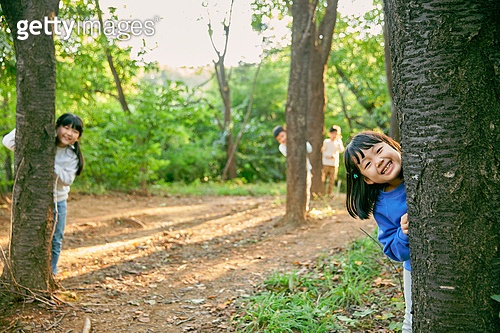
한국의 숨바꼭질 노래는 단순한 어린이 게임을 넘어,
The Korean hide-and-seek song goes beyond being just a children’s game.
리듬, 언어유희, 공동체의 정서가 함께 녹아 있습니다.
It embodies rhythm, wordplay, and a sense of community.
‘머리카락 보일라’처럼 운율감 있는 표현은,
Expressions like “Your hair will show!” carry rhythmic charm
한국어의 리듬과 유머를 느낄 수 있게 해줍니다.
and reveal the musicality and humor of the Korean language.
🪶 문화 어휘 정리 | Vocabulary & Culture Notes
한국어 발음 의미 영어 뜻
| 술래 | /sul-lae/ | 숨바꼭질에서 찾는 사람 | the seeker in hide and seek |
| 장독대 | /jang-dok-dae/ | 장을 담는 항아리를 두는 곳 | jar terrace for storing fermented sauces |
| 담장 | /dam-jang/ | 집을 둘러싼 벽 | wall surrounding a traditional house |
| 찌꽁 | /jji-kkong/ | ‘찾았다!’와 함께 외치는 감탄사 | exclamation shouted when finding someone |
| 전래동요 | /jeon-lae-dong-yo/ | 옛날부터 전해지는 어린이 노래 | traditional children’s song |

💛 함께 해볼까요? | Let’s Try It Yourself!
👀 눈을 감고 “열~하나, 열둘, 열셋!” 숫자를 세어 보세요.
👀 Close your eyes and count, “Eleven, twelve, thirteen!”
🐰 친구들은 장독대 뒤에 숨어요.
🐰 Let your friends hide behind the jars.
🐷 “찾았다, 찌꽁!” 하고 외쳐 보세요!
🐷 Then shout — “Found you! Jjik-kong!”
📚 한국 전통 놀이를 통해 배우는 한국어와 문화,
Learn Korean language and culture through traditional games and songs!
작은 노래 한 구절이 한국의 리듬, 유머, 그리고 따뜻한 정서를 전해줍니다.
A short children’s song can carry the rhythm, humor, and warmth of Korean life.
🎨 📝활동지 & QR 코드 worksheet download
활동지 다운 받으세요~ 색칠하면서 노래 불러 보세요~
Download the worksheet! 🎨 Sing along while you color!
📱 큐알코드 찍으면 바로 가기!
Scan the QR code to go directly!

더 많은 이야기가 이어질 거예요!
채널 고정!
More to come!
Stay tuned!
@ 서울 사람 Seoul Zian 서울지앵
#꼭꼭숨어라 #숨바꼭질 #전래놀이 #한국말놀이 #KoreanWordPlay
#전래동요 #FolkSong #LearnKorean #한국문화 #KoreanCulture
#전통놀이 #TraditionalGames #한국어배우기 #LanguageLearning
#서울지앵 #SeoulZian #전통과리듬 #TraditionAndRhythm
#말놀이 #KoreanPoetry #시 #YunDongju #한국문학 #KoreanLiterature
#장독대 #Cricket #가을밤 #AutumnNight #달빛 #Moonlight
#한국어 #EmotionalKorean #문화로배우는한국어 #KoreanThroughCulture #LearnKoreanThroughSongs
#찌콩