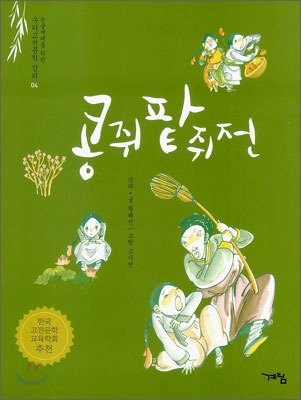
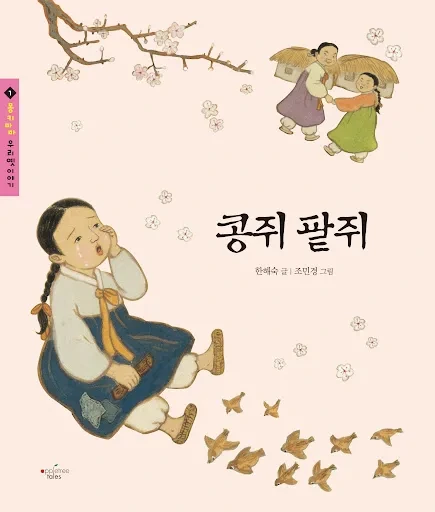
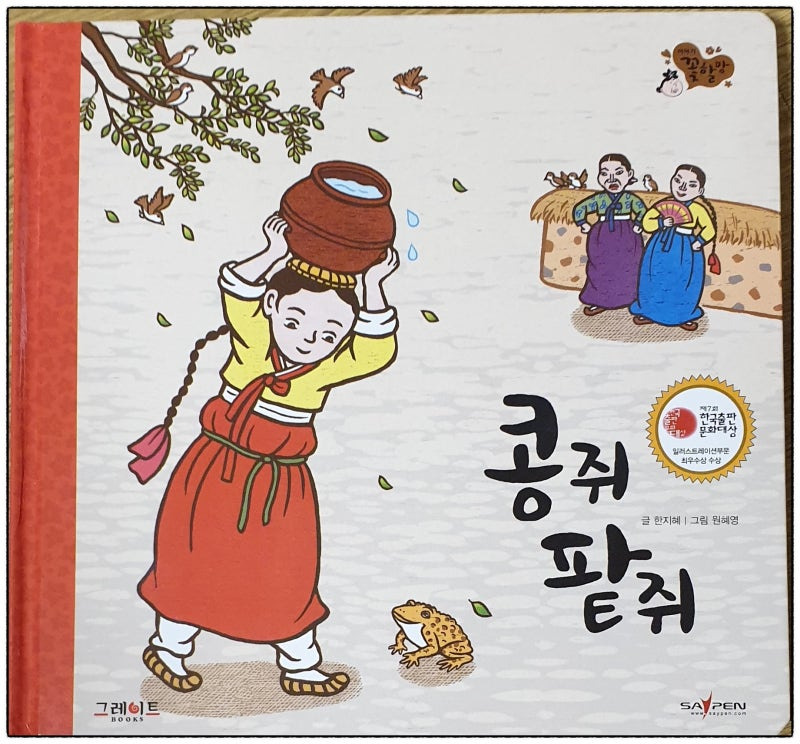
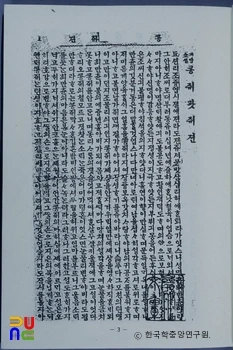
(3) Learn Korean Through a Folktale: Kongjwi and Patjwi 콩쥐 팥쥐 The Kind Stepdaughter and the Cruel Stepmother
seoulzian2025. 7. 16. 18:56
👠 Learn Korean Through a Folktale: Kongjwi and Patjwi 콩쥐 팥쥐
The Kind Stepdaughter and the Cruel Stepmother
seoulzian
👧 Kongjwi and Patjwi (콩쥐팥쥐)
📖 Full Story (줄거리)
▶ English Storyline (영어 줄거리)
A long time ago in Korea, there was a sweet and kind girl named Kongjwi. After her mother passed away, her father remarried. Her stepmother brought along her own daughter, Patjwi, who was mean, lazy, and jealous. The stepmother treated Kongjwi like a servant—making her do all the housework while favoring Patjwi in everything.
Kongjwi worked from dawn until night. One day, she was told she could attend the village party only if she finished impossible tasks: filling a leaky jar with water, hulling rice grains overnight, and weeding an entire field.
Feeling hopeless, Kongjwi cried, but then magical helpers appeared! A cow helped her plow the field, a turtle brought water to fill the jar, and birds came to sort the rice. With their help, Kongjwi finished everything.
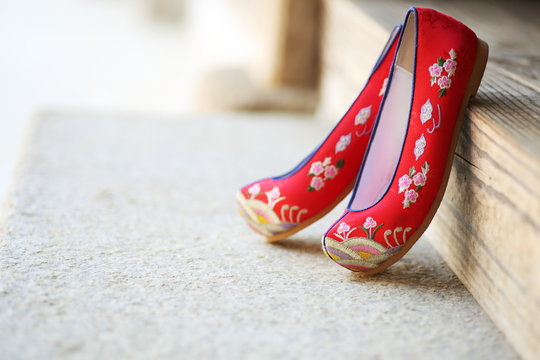
Wearing a beautiful dress gifted by a heavenly maiden, Kongjwi went to the party. There, a local governor’s son saw her and was enchanted. But as soon as Kongjwi realized the time, she ran away, leaving behind her shoe.
The man searched the whole village for the owner of the shoe, and eventually, he found Kongjwi. They got married and lived happily. Patjwi and her mother, filled with jealousy and anger, tried to copy Kongjwi’s story—but their plans backfired, and they ended up punished for their cruelty.
▶ 한국어 줄거리
옛날 옛적에 콩쥐라는 착하고 예쁜 소녀가 있었습니다. 어머니가 일찍 세상을 떠나자, 아버지는 새어머니를 맞이했습니다. 새어머니는 자신의 딸 팥쥐만 예뻐하고, 콩쥐에게는 집안일을 몽땅 시켰습니다. 콩쥐는 아침부터 밤까지 일하며 힘들게 살았습니다.
어느 날 마을 잔치가 열린다는 소식을 들었습니다. 새어머니는 구멍 뚫린 항아리에 물을 채우고, 쌀을 골라내고, 밭을 매야 잔치에 갈 수 있다고 말했습니다. 콩쥐는 슬퍼하며 울었지만, 그때 신기한 일이 벌어졌습니다.
소가 밭을 갈아주고,
거북이가 항아리에 물을 채워주고,
참새들이 쌀을 골라주었습니다.
모든 일을 마친 콩쥐에게 하늘에서 선녀가 나타나 예쁜 옷과 신발을 주었습니다. 콩쥐는 잔치에 갔고, 그곳에서 고을 원님의 아들이 콩쥐를 보고 한눈에 반합니다. 하지만 시간이 되어 콩쥐는 서둘러 떠났고, 한 짝의 꽃신을 떨어뜨리고 갑니다.
원님의 아들은 마을 전체를 돌아다니며 신발의 주인을 찾았고, 마침내 콩쥐를 찾아내어 결혼하게 됩니다. 팥쥐와 새어머니는 질투에 눈이 멀어 콩쥐처럼 해보려 했지만, 결국 벌을 받고 쫓겨났습니다.
🎓 Moral of the Story (교육적 메시지)
“Goodness and patience are rewarded, while cruelty and envy lead to downfall.” 착하고 인내하는 사람은 복을 받고, 못된 마음은 벌을 받는다.
🌍 Similar Stories from Around the World (비슷한 이야기)
European Tale: Cinderella – Kind stepdaughter, magical helpers, a lost shoe, and a happy ending
Vietnamese Tale: Tấm and Cám – A kind girl mistreated by her stepmother and stepsister
Chinese Tale: Ye Xian (葉限) – Early version of Cinderella, dating back to the Tang Dynasty
💬 Korean Proverb (한국 속담)
"콩 심은 데 콩 나고, 팥 심은 데 팥 난다." “If you plant beans, you get beans; if you plant red beans, you get red beans.” 👉 What you do determines what you get. Good or bad, your actions return to you.
콩
팥
🧠 Mini Korean Lesson (미니 한국어 레슨)
Korean Word Pronunciation Meaning Example Sentence
콩쥐
kong-jwi
name of the kind girl
콩쥐는 착한 소녀예요. (Kongjwi is a kind girl.)
팥쥐
pat-jwi
name of the mean girl
팥쥐는 욕심이 많았어요. (Patjwi was greedy.)
항아리
hang-a-ri
jar, earthen pot
물을 항아리에 담았어요. (I put water in the jar.)
잔치
jan-chi
feast, village party
마을 잔치가 열렸어요. (There was a village feast.)
📌 Try using these!
"콩쥐는 신발을 잃어버렸어요." → Kongjwi lost her shoe.
"팥쥐는 벌을 받았어요." → Patjwi was punished.
https://encykorea.aks.ac.kr/Article/E0058658
🎐 Cultural Note (문화 정보)
In Korean culture, this story reflects the Confucian values of kindness, patience, and justice. 한국 문화에서 이 이야기는 유교적 가치, 즉 착함, 인내, 정의를 반영합니다.
It also shows a belief in heavenly intervention rewarding the good and punishing the wicked—similar to karma. 또한 하늘의 보살핌과 벌이라는 관념, 즉 좋은 사람은 복을 받고 나쁜 사람은 벌을 받는다는 믿음을 보여줍니다. (불교의 업보(karma) 개념과도 비슷합니다.)
The characters' names themselves are symbolic: 이야기 속 인물들의 이름에도 상징이 담겨 있어요:
Kong (콩) = bean → soft, kind 콩은 부드럽고 착한 성격을 상징합니다.
Pat (팥) = red bean → harsh, bitter 팥은 거칠고 날카로운 성격을 나타냅니다.
Their names foreshadow their personalities. 이름이 성격과 운명을 암시하는 셈이죠.
Also, traditional hanbok (한복) and flower shoes (꽃신) are often featured in versions of this tale. 또한 이 이야기에는 종종 한복과 꽃신 같은 전통 복식이 등장합니다.
Even today, some Korean dramas and animations adapt Kongjwi and Patjwi for young audiences. 오늘날에도 이 이야기는 드라마나 애니메이션으로 제작되어 아이들에게 계속 전해지고 있습니다.